
How to Publish Articles That Inform, Engage and Inspire
How to Publish Articles That Inform, Engage and Inspire
Publishing an article is more than putting words on a page. It is an opportunity to share knowledge, tell a story and start a conversation with readers. Whether you are writing about theatre, the arts or a subject you know well, a thoughtful approach can help your article reach the right audience and make a lasting impression.
Start with a clear purpose
Before you begin writing, decide what you want your article to achieve. You might want to explain an idea, share practical advice, introduce a project or offer a fresh perspective on a topic. A clear purpose helps keep your writing focused and gives readers a reason to continue.
It is also useful to consider who you are writing for. Think about what your readers already know, what they may be curious about and what they should take away from the article. Writing with a specific audience in mind makes it easier to choose the right tone, examples and level of detail.
Choose a focused subject
A strong article usually explores one main idea rather than trying to cover everything at once. Choose a subject that is relevant to your readers and narrow it down to a manageable angle. For example, instead of writing broadly about theatre, you could focus on how a production develops from an early idea to opening night.
A focused subject also makes it easier to create a useful headline. Keep the title clear and accurate, and make sure it reflects what the article actually delivers.
Make the article easy to read
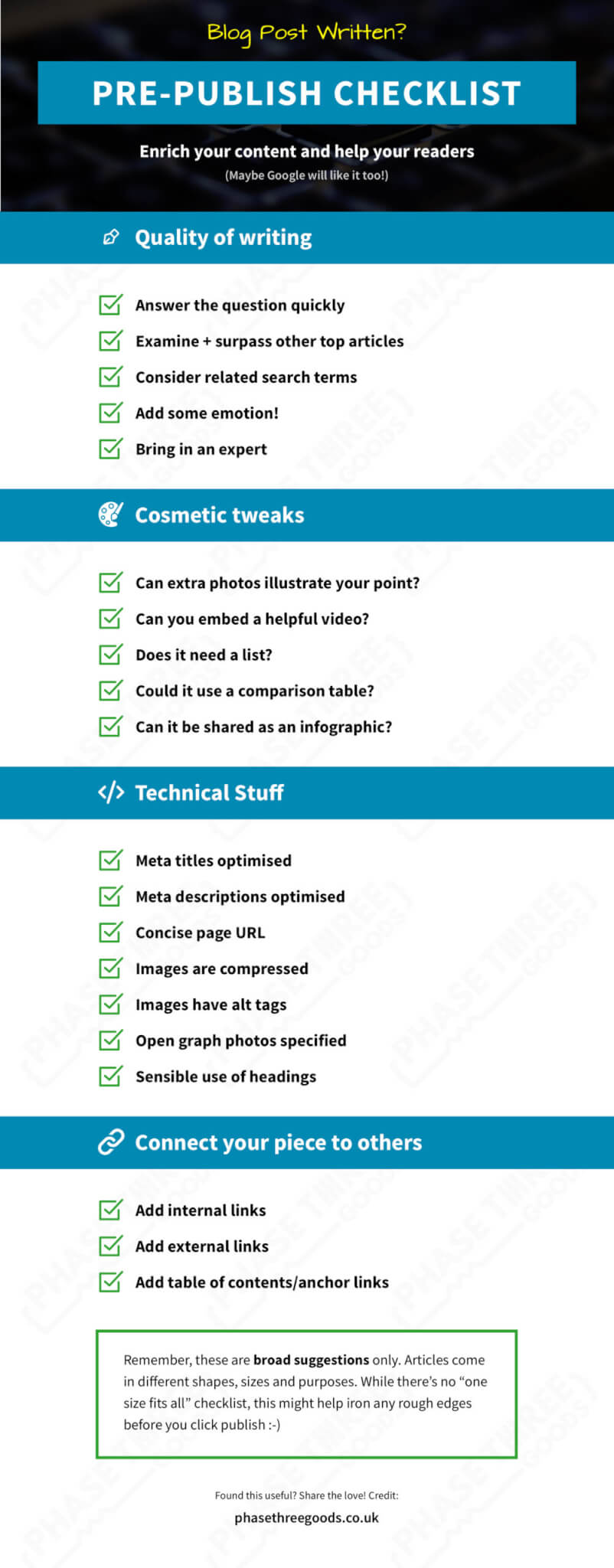
Readers often scan a page before deciding whether to read it in full. Use a clear introduction to set out the subject, then organise the main points into short sections with descriptive subheadings. Keep paragraphs concise and use straightforward language wherever possible.
Examples, quotations and practical details can help bring your ideas to life. If you include facts or make claims, check that they are accurate and use reliable sources. Careful research builds trust and makes an article more valuable to its readers.
Edit before publishing
Once the first draft is complete, take time to review it. Check that the article answers the questions raised in the introduction and that each section supports the main idea. Remove repetition, clarify complicated sentences and correct spelling, punctuation and grammar.
Reading the article aloud can help you spot awkward phrasing. It is also worth checking the final layout on a mobile device, as many people read online using a phone or tablet.
Publish and share your work
When the article is ready, publish it on a platform that suits its purpose and audience. Add a concise summary, an appropriate image where possible, and links to relevant information. Make sure the page is easy to navigate and that the article displays clearly across different devices.
Publishing is only the beginning. Share the article through suitable channels, such as a newsletter or social media, and invite readers to respond. Meaningful engagement can help your work find a wider audience and suggest ideas for future articles.
Keep creating
Regularly publishing useful, well-written articles can help build a recognisable voice and a stronger connection with readers. Each article is a chance to share something worthwhile, explore a new perspective and contribute to an ongoing conversation. Start with a clear idea, write with care and give your readers a reason to keep coming back.
7 Benefits of Publishing Articles
- Share knowledge with a wider audience.
- Build credibility in your field.
- Improve your writing skills.
- Increase website visibility.
- Connect with readers and communities.
- Showcase your expertise and ideas.
- Create lasting, shareable content.
Seven Drawbacks of Publishing Articles
- Publishing regularly takes time.
- Research can be demanding.
- Articles may attract little attention.
- Editing can be time-consuming.
- Fact-checking is essential.
- Negative feedback may occur.
- Keeping content fresh can be difficult.
Share knowledge with a wider audience.
Publishing articles makes it possible to share knowledge with a wider audience, reaching people beyond your immediate community. A useful insight, experience or idea can inform readers, spark discussion and help others discover new perspectives. By making your expertise accessible, you can contribute to a broader exchange of ideas and create connections with people who share your interests.
Build credibility in your field.
Publishing articles can help you build credibility in your field by demonstrating your knowledge, experience and thoughtful perspective. Sharing useful, well-researched insights gives readers a reason to trust your expertise and can help establish you as a reliable voice on the topics you cover. Over time, consistently publishing valuable content can strengthen your professional reputation and open doors to new connections and opportunities.
Improve your writing skills.
Publishing articles is an effective way to improve your writing skills. Each piece gives you practice in shaping ideas, choosing the right words and organising information clearly for readers. Over time, editing your work and responding to feedback can help you develop a stronger style, write with greater confidence and communicate more effectively.
Increase website visibility.
Publishing articles regularly can increase your website’s visibility by giving search engines fresh, relevant content to discover and index. Well-written articles that answer questions your audience is searching for may help your pages appear in more search results, bringing new visitors to your site. Sharing each article through social media, newsletters and other channels can extend its reach even further and encourage readers to explore more of your website.
Connect with readers and communities.
Publishing articles helps you connect with readers and communities by giving people a place to discover shared interests, exchange ideas and feel part of a wider conversation. Whether you are telling a story, sharing expertise or exploring an issue that matters locally, thoughtful writing can bring different perspectives together, encourage discussion and build lasting relationships with your audience.
Showcase your expertise and ideas.
Publishing articles gives you a platform to showcase your expertise and share ideas with a wider audience. By offering useful insights, explaining complex topics clearly or presenting a fresh perspective, you can demonstrate what you know and build trust with readers. Over time, consistent, thoughtful writing can help establish your voice and make your work more widely recognised.
Create lasting, shareable content.
Publishing articles creates lasting content that people can return to, share and discover long after it first appears. Unlike a fleeting social media post, a well-written article can continue to inform readers, attract new audiences and spark conversations over time. Share it through your website, newsletter or social channels to help its ideas travel further and reach people who may find them useful.
Publishing regularly takes time.
Publishing articles regularly can take more time than expected. Researching a topic, writing a draft, editing and preparing it for publication all require careful attention, and fitting these tasks around other commitments can be challenging. Without a realistic schedule, the pressure to publish frequently may also affect the quality of the work.
Research can be demanding.
Researching an article can be demanding, particularly when the subject is complex or reliable information is difficult to find. Checking facts, comparing sources and making sure details are up to date can take considerable time, sometimes delaying the writing and publication process. Without thorough research, however, an article may be inaccurate or less useful to its readers.
Articles may attract little attention.
One drawback of publishing articles is that they may attract little attention, particularly when there is a great deal of competing content online. Even a well-researched, engaging piece can be overlooked if it does not reach the right audience or is difficult to find. Sharing it through suitable channels and choosing a clear, appealing headline can improve its chances of being noticed, but there is no guarantee that readers will engage with it.
Editing can be time-consuming.
Editing can be one of the most time-consuming parts of publishing articles. A draft may need several rounds of revisions to improve its structure, check facts, refine the wording and correct spelling and grammar. This careful work helps ensure the article is clear and polished, but it can take time away from researching and writing new content.
Fact-checking is essential.
A key drawback of publishing articles is the time and care required to fact-check them. Every claim, quotation and statistic should be verified against reliable sources before publication, as errors can mislead readers and damage the writer’s or publisher’s credibility. This process can be particularly demanding when information is complex, fast-changing or difficult to confirm, but it is essential for producing trustworthy articles.
Negative feedback may occur.
One potential drawback of publishing articles is that negative feedback may occur. Readers can have differing opinions, and comments or criticism may sometimes feel discouraging, particularly when an article reflects considerable time and effort. Constructive feedback can help improve future writing, but it is important to consider responses thoughtfully and not let unhelpful remarks undermine confidence.
Keeping content fresh can be difficult.
Keeping content fresh can be difficult, particularly when you publish articles regularly or cover a specialist subject. Finding new angles, useful insights and timely topics takes research and creativity, while repeating familiar ideas can leave readers feeling disengaged. Planning ahead and listening to audience feedback can help, but maintaining a steady flow of original, relevant content still requires time and effort.
Tags: article publishing, audience, clear purpose, communication, editing, focused subject, fresh perspectives, headline, online publishing, proofreading, publish articles, readability, reader engagement, reliable sources, research, share knowledge, social media, storytelling, subheadings, wider audience, writing